Switching ecosystems is never just about specs on a page. It’s about whether you’re ready to give up iMessage for RCS, or trade Siri’s familiarity for a much smarter Gemini assistant. This year, that decision is harder than usual, because both Google and Apple showed up with genuinely strong flagships. We spent time with both phones side by side to help you figure out which one actually fits how you use your phone every day, not just which one wins on paper.
Design and Display: Two Very Different Philosophies
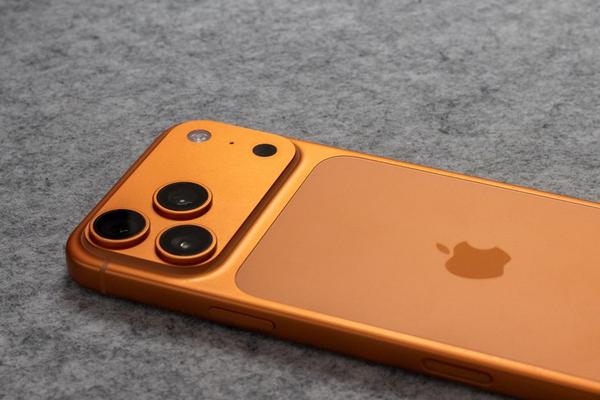
Apple finally gave the iPhone 17 Pro a redesign after years of incremental tweaks. It now uses an aluminum unibody chassis, which Apple says improves both durability and thermal performance, paired with a Ceramic Shield 2 front and an anti-reflective display that hits 3,000 nits of peak brightness. The Pixel 10 Pro XL sticks with the aluminum-and-glass build that Google has favored for a few generations now, and while it doesn’t feel like a dramatic departure, it’s still a premium, comfortable phone to hold.
If you’ve read any Pixel 10 Pro XL review this year, you’ll notice most reviewers agree the hardware refresh here is modest. Google spent its energy elsewhere, mostly on the chip and the software, rather than reinventing the phone’s look.
Performance: Google Tensor G5 vs Apple A19 Pro
This is where the gap is most obvious. The iPhone 17 Pro runs on Apple’s A19 Pro chip, which continues to lead the industry in raw CPU and GPU performance. If you play graphically demanding games or do heavy video editing on your phone, the iPhone stays faster and cooler under sustained load.
The Google Tensor G5 inside the Pixel 10 Pro XL isn’t built to chase benchmark records. Google has always optimized Tensor chips around AI and machine learning tasks rather than pure horsepower, and that trade-off is still very much in play here. For everyday use, browsing, messaging, social media, and even most photography, you won’t notice a meaningful difference. Push it into gaming or intensive multitasking, and the iPhone pulls ahead.
Camera Quality: Where the Pixel Still Has an Edge
Cameras are usually the deciding factor in any iPhone vs Pixel debate, and this year’s matchup is closer than the raw numbers suggest. The Pixel 10 Pro XL has a 50MP main sensor, a 48MP ultrawide, and a 48MP telephoto lens capable of true 5x optical zoom. The iPhone 17 Pro counters with three 48MP sensors of its own, including a periscope telephoto that reaches 8x optical-quality zoom, though its true optical range tops out at 4x.
In practice, the Pixel’s computational photography still edges ahead in tricky lighting, high-contrast scenes, and portraits. Google’s processing tends to produce punchier, more consistently pleasing results straight out of the camera app. The iPhone 17 Pro, meanwhile, shoots more natural, true-to-life colors and remains the stronger choice for video, especially now that the A19 Pro supports ProRes RAW capture for anyone doing serious professional work. Selfie shooters will also want to note the Pixel’s front camera continues to be one of the best in the business.
Zoom and Low-Light Performance
Zoom is a genuine strength for the Pixel 10 Pro XL, thanks to its longer true optical range and Google’s AI-assisted zoom processing. In low light, both phones perform well, but the Pixel’s night mode still has a slight advantage in extreme darkness, while the iPhone tends to preserve detail a bit more accurately.
AI Assistant Features: Gemini vs Apple Intelligence
This is arguably the biggest differentiator for switchers weighing which ecosystem to commit to. The Pixel 10 Pro XL is built around Google’s Gemini AI, which is deeply woven into the phone’s call screening, photo editing, search, and general assistant functions. If AI features are a priority for you, Google currently has the more mature, more capable assistant experience on a phone.
Apple Intelligence has improved, and it’s genuinely useful for writing tools, notification summaries, and on-device privacy-focused features. But it still feels a step behind Gemini in terms of raw capability and how proactively it surfaces useful information. If AI is the main reason you’re considering a switch, that alone might tilt things toward the Pixel.
Battery Life and Charging
Battery capacity actually favors the Pixel 10 Pro XL slightly, with its 5,200mAh cell edging out the iPhone 17 Pro Max’s 5,088mAh battery, the largest Apple has ever put in an iPhone. Charging speeds are close too: the Pixel supports 45W wired charging, while the iPhone charges at up to 40W with Apple’s newer Dynamic Power Adapter, getting to 50% in about 20 minutes. Both phones support 25W wireless charging through the Qi2.2 standard, whether that’s MagSafe, Pixelsnap, or a third-party charger.
Despite the Pixel’s slightly bigger battery, real-world testing tends to show the iPhone lasting a little longer through a full day, largely thanks to Apple’s tighter software-to-hardware optimization. If all-day battery life without a second thought is your top priority, the iPhone still has a small edge.
Value for Money
Both phones sit firmly in flagship territory, and neither is a budget-friendly purchase. Where the Pixel 10 Pro XL tends to win is in features-per-dollar: you’re getting a more advanced AI assistant, a longer optical zoom, and often a lower starting price for comparable storage tiers. The iPhone 17 Pro justifies its price with best-in-class performance, superior build durability, and an ecosystem that remains unmatched for reliability if you already own other Apple devices like a Mac, iPad, or Apple Watch.
Which One Should You Buy?
If you’re deep in the Apple ecosystem, prioritize gaming performance, or shoot a lot of video, the iPhone 17 Pro is the safer, more polished choice. If you want the most capable AI assistant on the market, better zoom range, and computational photography that consistently impresses, the Pixel 10 Pro XL is genuinely one of the strongest arguments for switching to Android this year. Neither phone is a bad choice, it really comes down to which ecosystem and priorities matter more to you.
Frequently Asked Questions
Is the Pixel 10 Pro XL better than the iPhone 17 Pro for photography?
For still photography, the Pixel 10 Pro XL often edges ahead thanks to its computational photography and longer optical zoom. For video, the iPhone 17 Pro remains the stronger option, especially for professional-grade capture.
Does the Pixel 10 Pro XL support the same charging speed as the iPhone 17 Pro?
The Pixel 10 Pro XL charges slightly faster at 45W wired compared to the iPhone 17 Pro’s 40W, though both support 25W wireless charging over Qi2.2.
Which phone has better AI features, Pixel 10 Pro XL or iPhone 17 Pro?
The Pixel 10 Pro XL currently offers the more advanced and deeply integrated AI experience through Gemini, while Apple Intelligence on the iPhone 17 Pro focuses more on writing tools, summaries, and privacy-first features.
Is the Google Tensor G5 as powerful as Apple’s A19 Pro chip?
No, the A19 Pro outperforms the Tensor G5 in raw CPU and GPU benchmarks, particularly for gaming and heavy multitasking. The Tensor G5 is instead optimized for AI and machine learning tasks.
Should I switch from iPhone to Pixel this year?
If AI features, camera zoom range, and value for money matter most to you, the Pixel 10 Pro XL makes a strong case. If you’re invested in the Apple ecosystem or need top-tier gaming and video performance, staying with the iPhone 17 Pro is likely the better fit.