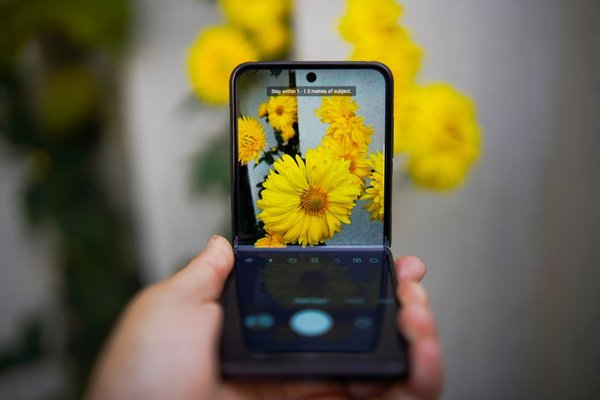
Foldable phones have moved well beyond the fragile first-generation experiments, but durability is still the question that should decide whether you buy one. A modern foldable can survive years of normal opening and closing, yet it still has more moving parts, a softer inner display, and potentially higher repair bills than a conventional flagship. The real question is whether those extra risks fit the way you use and keep a phone.
Foldable phone durability is much better now
Manufacturers have spent several generations strengthening hinges, display layers, frames, and water resistance. Current designs use tougher hinge materials, ultra-thin glass beneath flexible display layers, and better sealing around the chassis. Some recent models now offer water and dust protection that would have seemed unrealistic for a foldable only a few years ago.
Google rates the Pixel 10 Pro Fold at IP68 and says its gearless hinge is twice as durable as the previous generation. Google also says the device is engineered to handle more than 200,000 folds. Samsung’s Galaxy Z Fold7 carries an IP48 rating and uses a reinforced hinge, stronger frame materials, and a thicker ultra-thin glass layer in its main display.
That progress matters, but a foldable still cannot be treated exactly like a slab phone. The inner panel has to bend, so it cannot use the same thick rigid cover glass found on a conventional smartphone.
How long does a foldable screen actually last?
The foldable screen lifespan is not a simple countdown to failure. Laboratory fold-count claims show that the hinge and panel have been repeatedly tested, but heat, cold, grit, drops, pressure on the inner display, and carrying habits all influence real-world longevity.
To put 200,000 folds into perspective, opening and closing a phone 100 times every day would take roughly five and a half years to reach that figure. Many owners will fold their phones less often. That does not guarantee a problem-free five years, but it shows why ordinary folding itself is no longer the biggest concern for most buyers.
The inner display still needs extra care
The flexible main screen is designed for normal taps and swipes, but it is more vulnerable to concentrated pressure than a rigid glass display. A hard fingernail press, a grain of sand trapped before closing, or a small object caught between the halves can cause damage that would be less likely on a standard phone.
A useful habit is to check the inner screen before closing the phone after visiting a beach, workshop, or dusty area. Removing one small particle can prevent a pressure mark or damaged display layer later.
The hinge is stronger, but it is still a moving part
Modern hinges distribute stress more evenly and are far more refined than early foldable mechanisms. Google moved to a gearless hinge on the Pixel 10 Pro Fold partly to reduce wear points and avoid problems caused by debris around traditional gears.
Even so, a hinge remains mechanical. A hard drop on the hinge edge, dirt buildup, or a bent frame can affect how smoothly the device opens. If a foldable starts making grinding sounds, develops unusual resistance, or stops opening flat, forcing it is a bad idea. An inspection is safer than turning a small mechanical issue into an expensive display failure.
Water and dust resistance vary more than buyers expect
Water protection has improved sharply. The Pixel 10 Pro Fold’s IP68 rating shows that a foldable can now match the headline water-and-dust rating of many conventional flagships. The Galaxy Z Fold7’s IP48 rating also provides strong water protection, but its dust protection is more limited.
That difference is why you should read the exact IP rating instead of assuming every premium foldable is equally sealed. Water resistance can also diminish as seals age. If your job regularly exposes a phone to fine dust, sand, or construction debris, a conventional rugged phone remains the safer choice.
Repair cost is the risk many buyers underestimate
A foldable can be durable and still be expensive when something goes wrong. Two displays, a hinge assembly, and a more complex internal structure mean the foldable phone repair cost can be much higher than a routine screen replacement on a standard handset.
For a current U.S. example, Samsung lists a Galaxy Z Fold7 inner-screen repair at $449 and an inner screen module replacement at $589. Prices vary by country, taxes, service centre, and the exact damage, so check local pricing before buying rather than relying on a figure from another market.
Accidental-damage coverage deserves the same attention as the phone’s purchase price. Compare deductibles, claim limits, hinge coverage, and inner-screen fees. For some owners, a good protection plan changes the financial risk more than a small discount on the device.
Who should buy a foldable in 2026?
A foldable is a sensible choice if you generally take care of your devices, use a case, avoid harsh dusty environments, and value the larger screen or compact folding design enough to accept a little extra care. For these users, modern foldable phone durability is strong enough that the format no longer feels experimental.
A standard phone is still the better fit if you drop devices frequently, keep the same handset for six or seven years, work around abrasive debris, or strongly dislike paying for insurance. Before choosing, it can also help to compare foldable phones vs standard phones, read a foldable phone buying guide, and learn how to protect a foldable screen.
FAQ
Are foldable phones durable enough for everyday use?
Yes. Current foldables are designed for normal daily opening, closing, commuting, and pocket use. The flexible inner display remains the main area that needs extra care around sharp objects, grit, and concentrated pressure.
How many times can a foldable phone be folded?
It depends on the model. Google says the Pixel 10 Pro Fold is designed for more than 200,000 folds. Fold-count tests are useful, but actual lifespan also depends on temperature, debris, drops, and handling.
Do foldable screens break at the crease?
Not simply because a crease is visible. The crease is a normal part of the flexible display. Lifting layers, dead pixels, bright lines, unusual sounds, or touch problems are more meaningful signs that service may be needed.
Are foldable phones worth the extra repair risk?
They can be if the larger display or compact design meaningfully improves how you use your phone. Buyers who prioritise maximum ruggedness and the lowest repair risk should still choose a conventional flagship.
Are foldable phones worth it?
For many buyers in 2026, yes. Durability has improved enough that normal folding is no longer a strong reason to reject the entire category. The trade-off is that the inner screen remains more delicate, dust protection varies by model, and repairs can be costly.
The best approach is to treat durability as an ownership-cost decision rather than a fear of the hinge. Choose a model with suitable water and dust protection, check repair pricing in your market, consider accidental-damage coverage, and use sensible habits around the inner display. If those compromises fit your lifestyle, a foldable can now be a practical everyday phone rather than a fragile novelty.