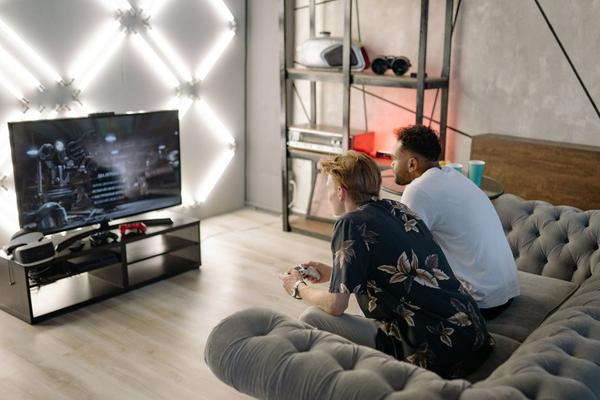
In a mini LED vs OLED TV comparison, the best screen is not necessarily the brightest one. A Mini LED might make afternoon football look more vivid in a sunlit living room. Turn off the lights for a film, however, and an OLED’s perfectly black pixels can make the same room feel like a cinema. Both are premium choices, but their strengths show up in different situations.
Rather than choosing by the biggest brightness figure on a label, think about when you watch, where you sit and which content fills your screen.
What Makes Mini LED and OLED Different?
A Mini LED TV is an LCD television with a backlight containing many small LEDs. Its local dimming system brightens and darkens separate zones behind the picture. This improves contrast compared with simpler LCD backlights, but each zone still controls more than one pixel.
OLED works differently. Every pixel creates its own light and can switch off independently, producing true black beside a bright object. OLED panel varieties, including WOLED and QD-OLED, differ in colour and brightness; the label alone does not describe every model’s performance.
Mini LED quality also varies enormously. The number of dimming zones helps, but the processing that controls them is equally important. A television with more zones is not automatically the better television.
Contrast and Black Levels: OLED’s Strongest Argument
In a dark room, OLED normally delivers the more convincing picture. Stars can shine against an unlit sky without lifting the surrounding blacks. Dark film scenes retain depth, and the black bars above and below widescreen movies stay genuinely black.
High-end Mini LED televisions can approach that appearance, yet some light may spill around bright objects. This glow, often called blooming or haloing, can be visible around white subtitles against a dark background. Depending on the dimming algorithm, very small highlights might also be reduced in brightness to avoid halos.
One showroom test is a dark scene with subtitles rather than the colourful demonstration reel. If the glow around the text bothers you, OLED may justify its higher price. For further context, see our TV contrast ratio guide.
Brightness: Look Beyond the Peak Number
Mini LED often has the advantage when a large portion of the picture stays bright. Think daytime sport, snow-covered landscapes or television programmes viewed with curtains open. Many Mini LED sets sustain enough full-screen brightness to compete with strong ambient light.
OLED is no longer automatically dim by comparison. Premium modern OLED televisions can produce extremely bright small HDR highlights, and some outperform specific Mini LED models in those tests. Peak brightness for a tiny window is not the same measurement as sustained brightness across an entire screen.
Reflections complicate the result. A glossy screen facing windows can become distracting even if its measured brightness is impressive. Anti-reflective coatings help, though some change the way blacks look under lights. Match the test conditions to your living room before deciding.
Colour, Viewing Angles and Processing
Both technologies can produce excellent colours. Quantum-dot Mini LED models and QD-OLED televisions are capable of vibrant highlights, but natural-looking skin tones depend on calibration and picture settings. Movie or Filmmaker modes are often a better starting point than a shop’s exaggerated Vivid mode.
OLED generally keeps its colours and contrast more consistent when viewed from the side. That matters when family members sit along a wide sofa. Certain Mini LED panels improve off-axis viewing, while others visibly lose contrast away from the centre.
Do not overlook video processing. Upscaling ordinary broadcasts, controlling gradients and handling motion can separate two TVs with similar panel technology. A strong processor may matter more for everyday streaming than a small difference in laboratory brightness scores.
Which Is Better for Gaming?
OLED pixels change state extremely quickly, reducing response-time blur around moving objects. Deep blacks also add atmosphere to games set in caves or nighttime streets. Mini LED remains an excellent option for bright, colourful games, especially in rooms used during the day.
For either display, check the actual model for 120Hz support, variable refresh rate, auto low-latency mode, input lag and enough suitable HDMI 2.1 ports for your equipment. These features are not guaranteed by the screen type alone.
Very quick OLED response can make 30fps camera pans appear noticeably juddery. Some motion processing helps with films but may add gaming delay. Our TV gaming settings guide covers adjustments worth checking after setup.
Burn-In and Long-Term Reliability
OLED burn-in is a genuine possibility when the same logos, news tickers or game interface elements stay in fixed positions for extended periods. Modern sets use protective measures, and mixed viewing significantly reduces practical risk. An occasional long gaming session does not mean burn-in is inevitable.
Mini LED avoids this OLED-specific form of permanent image retention, making it attractive for constant news channels or PC desktop use. Nevertheless, LED backlights and LCD panels can age, develop uneven lighting or fail. Neither tv display technology comes with a guaranteed lifespan advantage for every household.
If you plan to keep a screen for many years, consider your habits alongside the manufacturer’s warranty and any coverage exclusions.
Value Depends on the Room, Not Just the Screen
Mini LED TVs span more price points and often provide a larger display for the same money. OLED tends to start at a higher price, though sales can narrow the difference. An expensive flagship Mini LED can cost more than a midrange OLED, so compare individual models rather than assuming a fixed price hierarchy.
Imagine choosing between a 75-inch Mini LED and a smaller OLED for an open-plan family room. If most viewing involves afternoon sport, cartoons and casual streaming, the larger Mini LED could deliver more everyday enjoyment. In a light-controlled film room, the smaller OLED might be the smarter compromise.
Measure the sofa-to-screen distance before spending extra on panel technology. Our TV size and viewing distance guide is a useful starting point for choosing dimensions that actually suit your space.
Frequently Asked Questions
Is OLED better than Mini LED for films?
Usually, especially in a dim room. OLED’s pixel-level control gives it cleaner dark scenes and no backlight halos. A premium Mini LED can still look excellent, particularly with some ambient lighting.
Does every Mini LED TV have blooming?
The backlight design allows some haloing, but visibility varies greatly. Better local dimming hardware and software can make it difficult to notice in ordinary scenes.
Can an OLED TV work in a bright living room?
Yes. Many current OLEDs are bright enough for daytime viewing, especially with good reflection handling. A high-brightness Mini LED may still be preferable opposite large windows.
Which technology lasts longer?
There is no universal winner. OLED can experience uneven pixel wear with persistent static images; Mini LED TVs can develop backlight or panel faults. Usage and model quality matter.
Choosing Your Next TV
Choose OLED if deep blacks, wide seating angles and crisp motion matter most. Choose Mini LED if you want sustained brightness, larger screen options or fewer concerns about static graphics. The best mini led vs oled decision comes from testing similarly priced models with familiar content in lighting like your home. Specifications guide the shortlist; your room should settle the choice.